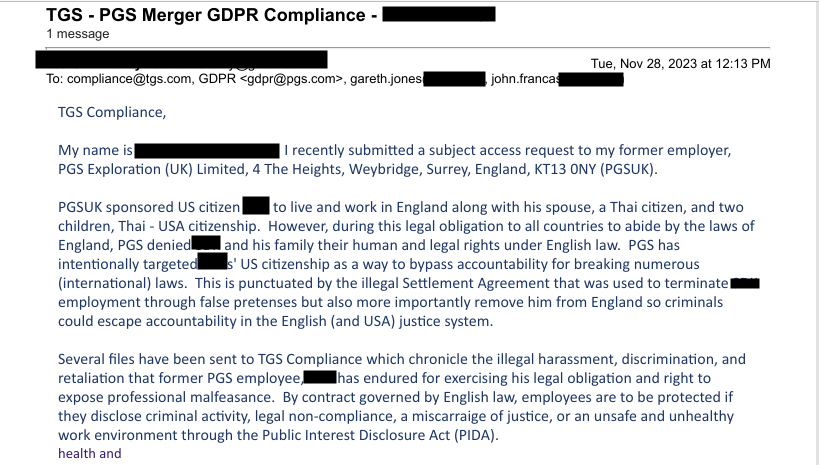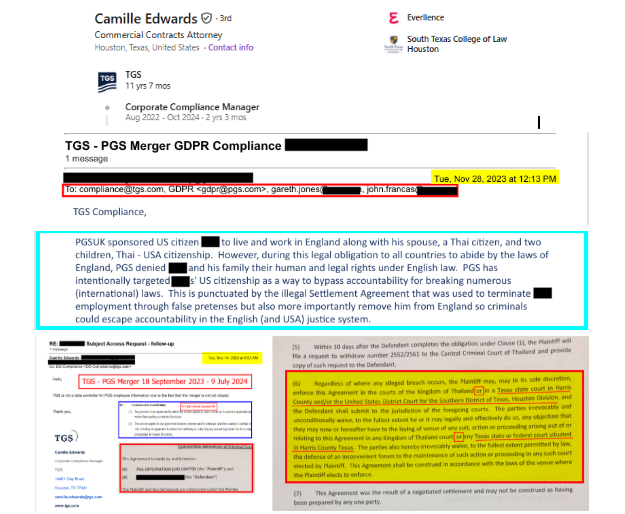
Commercial Contracts Attorney with Everllence and former Corporate Compliance Manager with TGS During the Merger
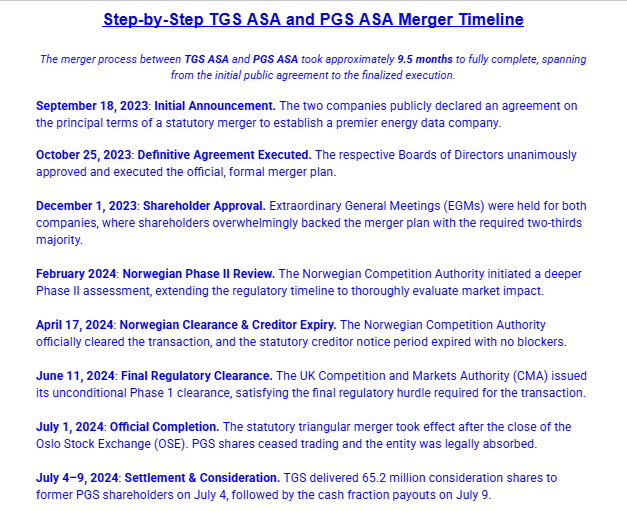
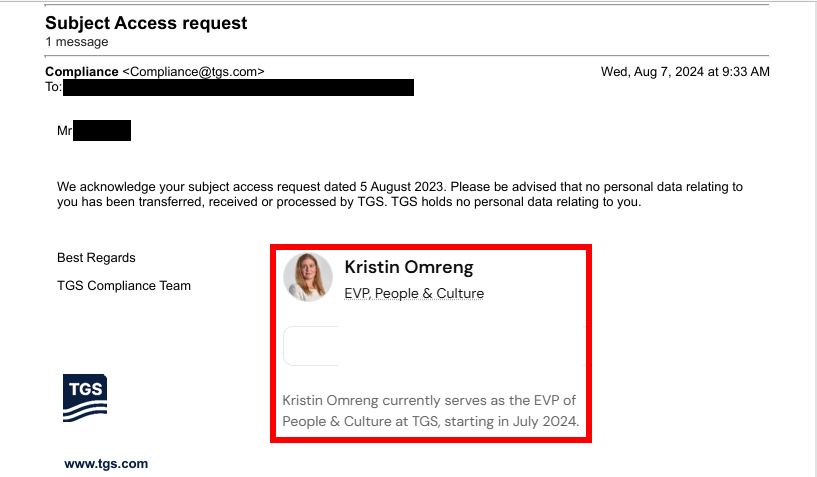
Introduction to Legal Mergers, Contracts and Compliance
International merger requirements require comprehensive, ongoing litigation updates to be disclosed to stakeholders (shareholders, creditors, and regulatory authorities) across all three jurisdictions of Norway, United Kingdom (UK) and the United States of America (USA). Failing to disclose pending or active legal liabilities risks transaction cancellation, significant civil fines, or post-merger lawsuits.
What Should a Compliance Manager for a Multi-national Company Know about Contracts and Whistleblowing?
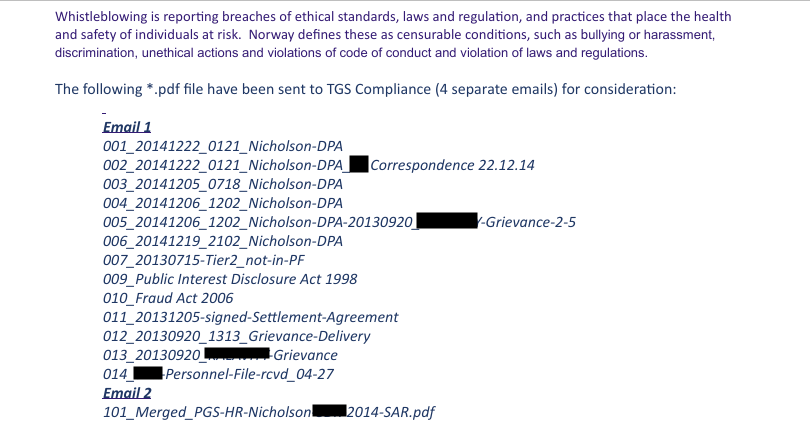
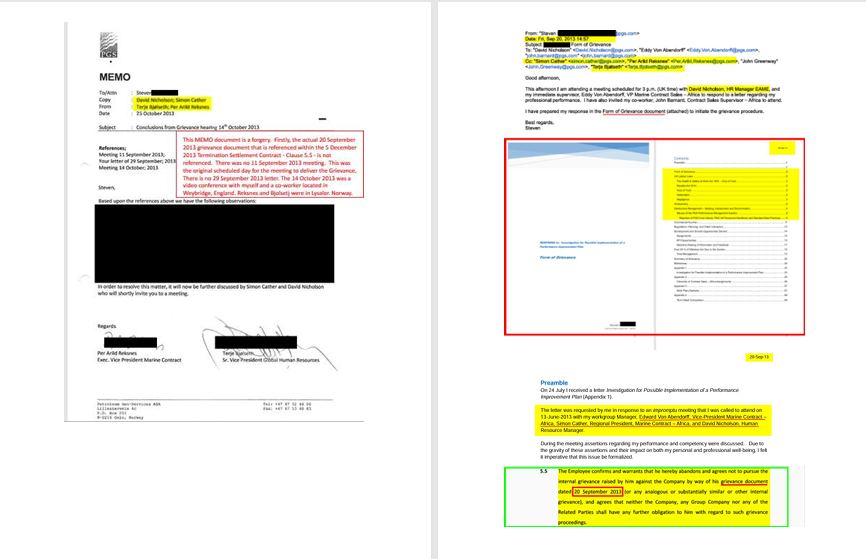
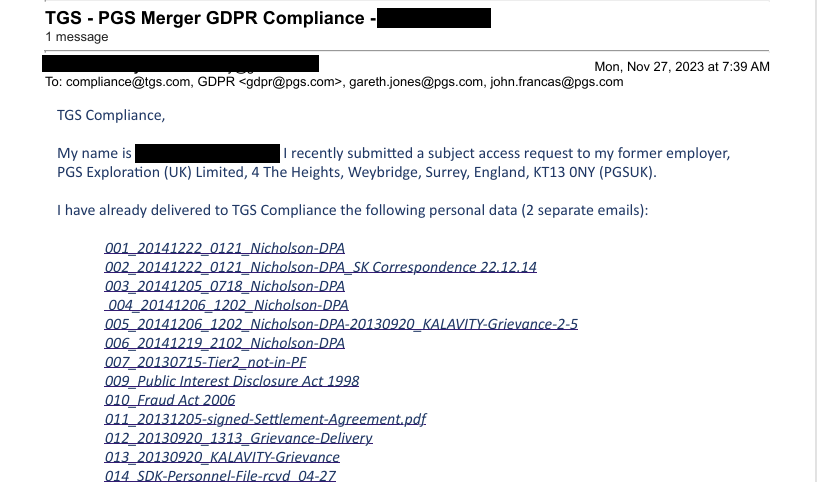
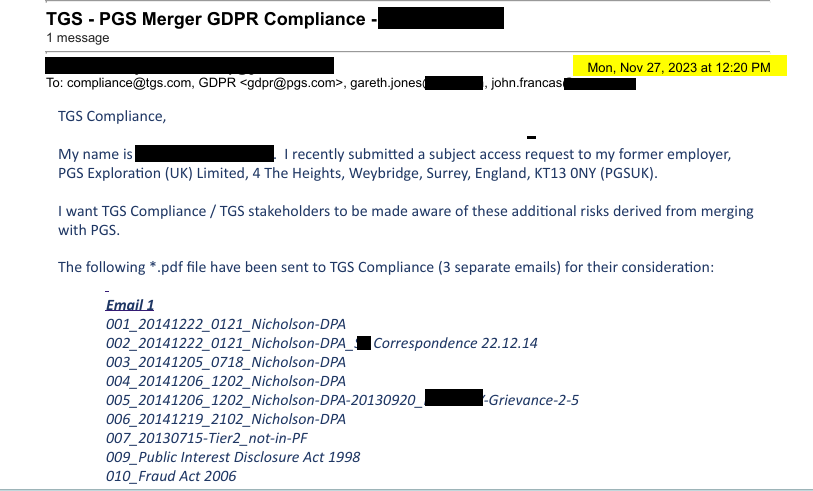
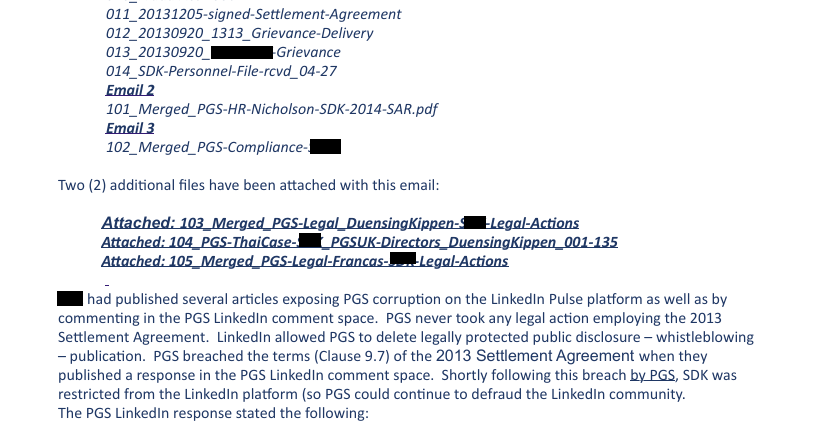
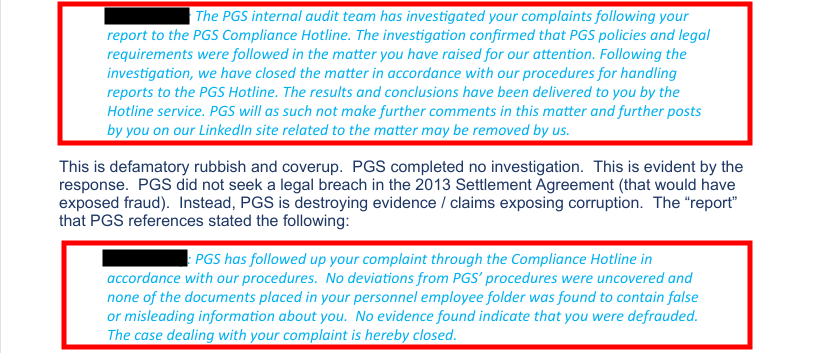
Workplace Grievance delivered 20 September 2013
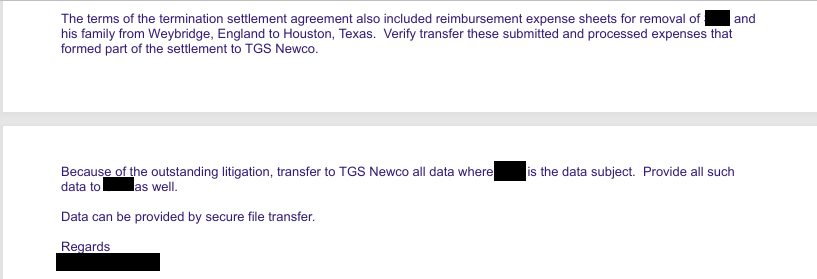
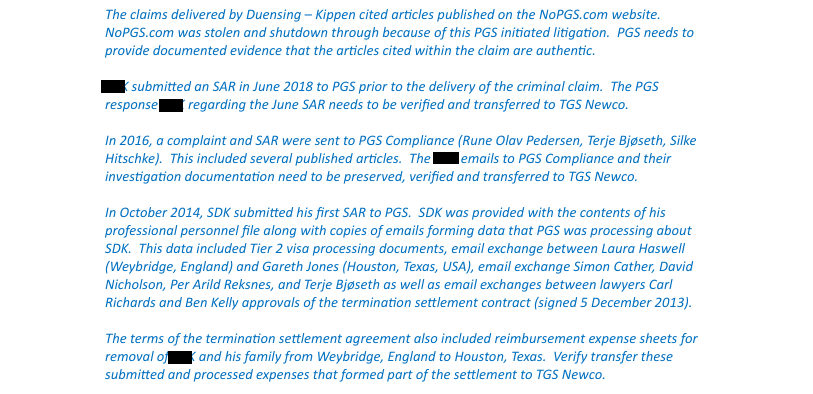
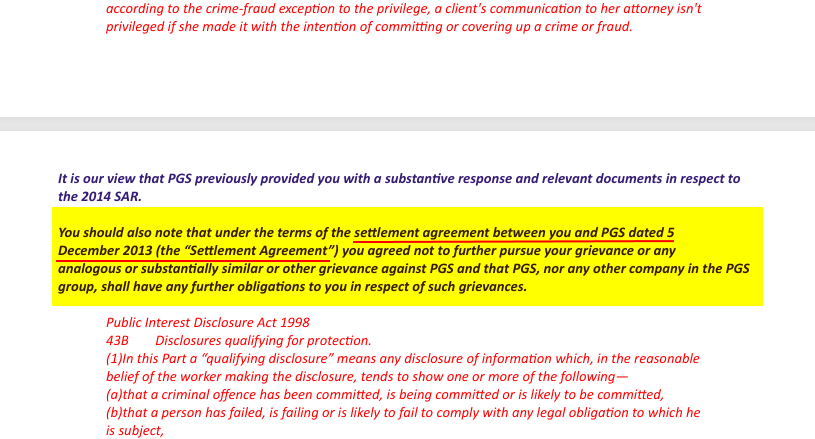
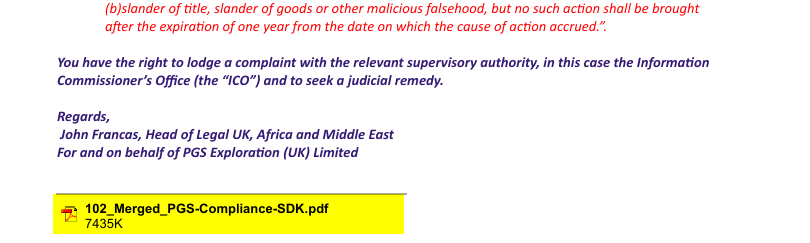
Termination Settlement Contract PGS Exploration (UK) Limited and Whistleblower (signed 5 December 2013 – governed by the law of England )
PGS Personnel File
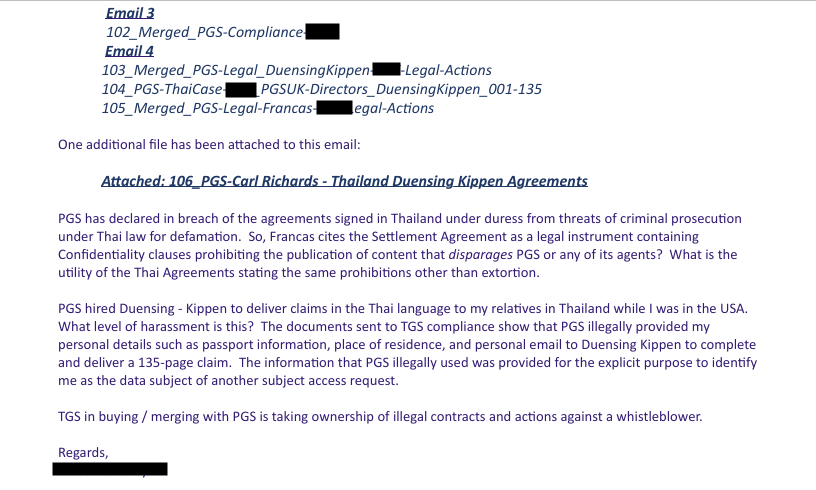
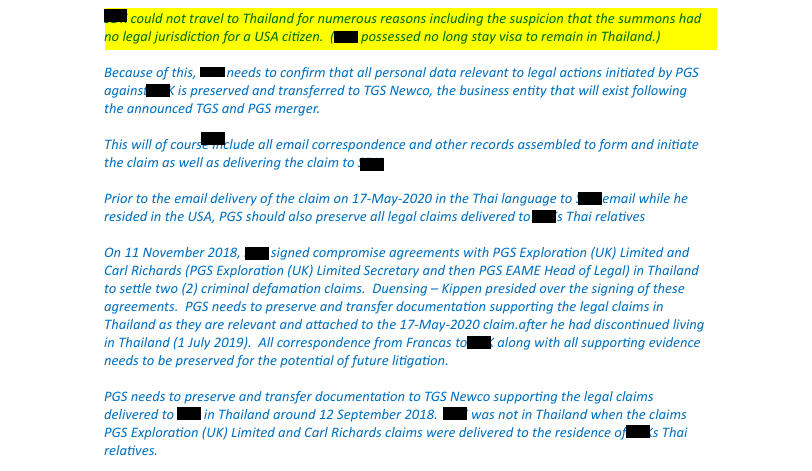
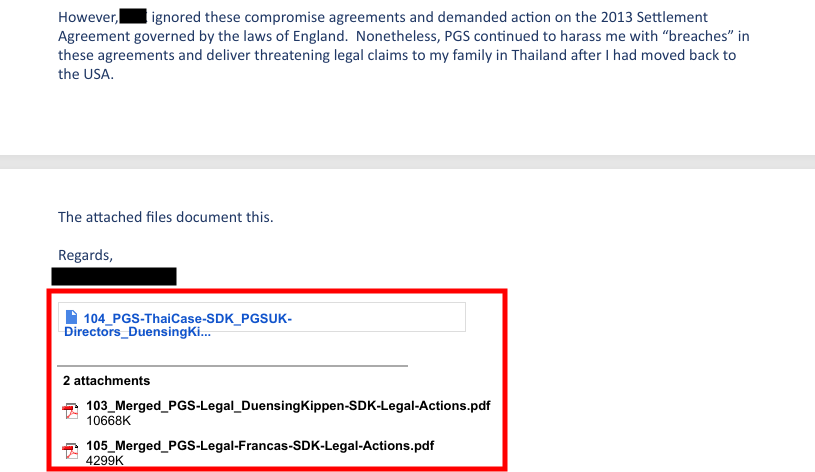
Thailand Agreement Between Carl Richards and US Citizen Whistleblower
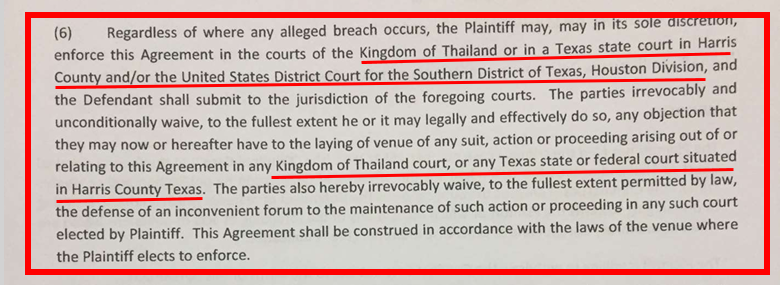
Thailand Agreement Between PGS Exploration (UK) Limited and Whistleblower signed to Offset Criminal Prosecution
Norway
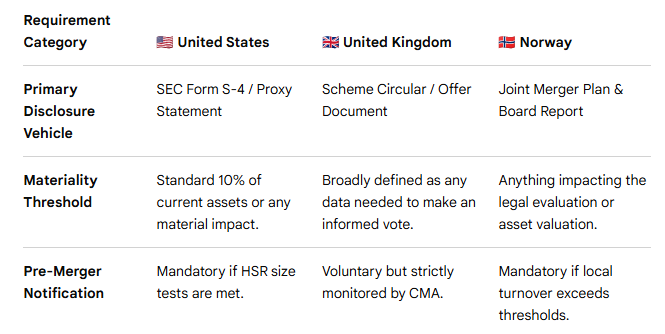
Norway blends domestic corporate laws with EU/EEA-aligned commercial standards.
- The Joint Merger Plan (Fusjonsplan): Under the Norwegian Public Limited Liability Companies Act, the boards of the merging entities must draft a Joint Merger Plan and an accompanying Board Report (styrets redegjørelse) to shareholders. This report is legally mandated to explain any circumstances that might impact the company’s financial standing, which structurally includes material ongoing litigation.
- Creditor and Shareholder Scrutiny: Norwegian law provides a mandatory creditor objection period after a merger is registered with the Brønnøysund Register Centre (Brønnøysundregistrene). If ongoing litigation could compromise the surviving entity’s solvency or the share exchange ratio, stakeholders have the immediate right to contest the merger plan or demand share redemption.
United Kingdom (UK)
The UK landscape relies heavily on both takeover rules and competition scrutiny.
- Takeover Code Compliance: For a merger involving a UK public company, the Takeover Code dictates that the formal offer document or scheme circular must contain all material information necessary for shareholders to make an informed decision. This explicitly includes details of any material litigation affecting either the bidder or target group.
- Competition and Markets Authority (CMA): While filing is technically voluntary in the UK, the CMA actively reviews cross-border transactions under its “4Ps” framework (Pace, Predictability, Proportionality, Process). If a company is embroiled in ongoing antitrust or intellectual property litigation that alters its “share of supply” or dynamic market influence, these details must be disclosed to the CMA during investigations.
United States (USA)
In the US, requirements vary depending on whether the company is publicly traded or a private entity requiring regulatory clearance.
- Public Companies (SEC Requirements): Publicly traded companies involved in an international merger must file a Form S-4 (Registration Statement) or a Schedule 14A (Proxy Statement). Under SEC Regulation S-K, Item 103, companies must rigorously detail any ongoing material litigation, the name of the court, the factual basis of the claim, and potential relief sought.
- Regulatory Filings (HSR Rules): If the transaction meets jurisdictional size thresholds, both parties must submit a pre-merger notification via the Hart-Scott-Rodino (HSR) Act to the FTC and DOJ. New HSR rules demand highly granular disclosures of transaction rationales and underlying corporate structures. If ongoing litigation threatens or impacts market competition, it must be thoroughly addressed.
Strategic Lawsuit Against Public Participation (SLAPP)
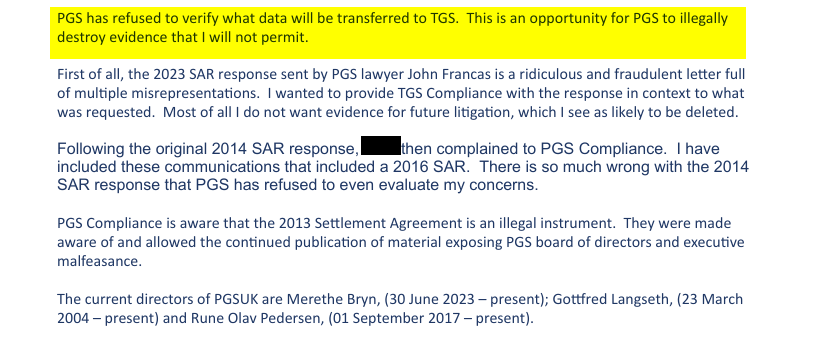
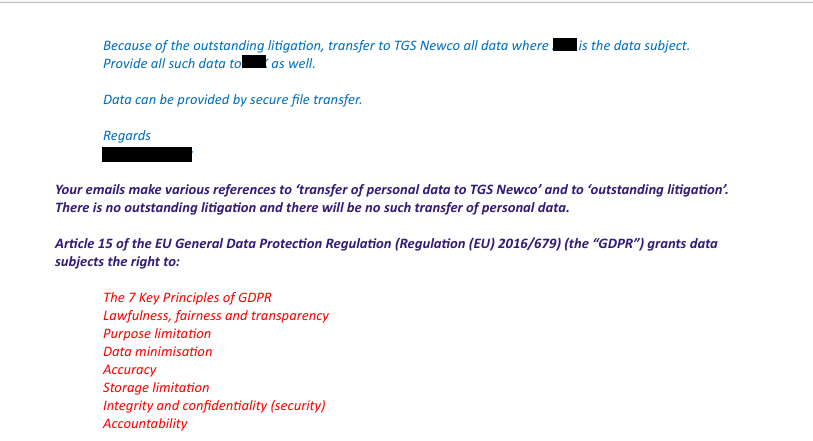
When personal data and evidence critical to an ongoing Strategic Lawsuit Against Public Participation (SLAPP) suit are destroyed during a multi-national merger—despite repeated, explicit preservation requests from a whistleblower—the misconduct ripples across multiple jurisdictions (UK, Norway, and the USA).
While the physical or corporate existence of the merger itself is rarely undone or declared void ab initio solely by document destruction, the legality, regulatory approval, and severe post-closing liabilities of the transaction are profoundly compromised.
The intentional or highly negligent destruction of this data alters the legal landscape for both the selling and acquiring entities:
1. The Impact on “Successor Liability” (The Poisoned Asset)
A foundational principle of international corporate law is that the acquiring company assumes the legal liabilities of the predecessor.
- The Sinking Ship Strategy Fails: If a company enters a merger burdened by an active SLAPP suit and a systemic whistleblower dispute, it cannot legally wipe its record clean by destroying files during the closing window.
- Inherited Corporate Liability: In a share purchase or a transfer where employment liabilities carry over (such as TUPE in the UK or Chapter 16 of the Working Environment Act in Norway), the acquiring company legally steps directly into the shoes of the wrongdoer. By taking over an entity that has actively destroyed evidence, the new parent company absorbs an massive, toxic legal exposure.
2. Spoliation of Evidence & “Adverse Inference” (US Law)
In the United States, the duty to preserve evidence is triggered the moment litigation is reasonably anticipated. Intentionally or negligently purging records after repeated preservation demands constitutes spoliation of evidence.
- The “Adverse Inference” Sanction: If the case is heard in a US court, a judge can issue an adverse inference instruction to the jury. The court will instruct the jury to legally presume that the destroyed personnel files, compliance alerts, and emails contained evidence showing the SLAPP suit was malicious and that the whistleblower’s initial disclosures were entirely true.
- Default Judgments and Striking Defenses: If the destruction completely disables the whistleblower’s ability to defend against the SLAPP suit or advance their retaliation claims, courts have the power to throw out the company’s claims entirely and enter a default judgment against the corporation.
3. Criminal Obstruction and Sarbanes-Oxley (SOX) Violations
If the underlying whistleblowing involves violations of US federal law, accounting irregularities, or securities fraud, destroying records takes on a criminal dimension.
- Section 802 of the Sarbanes-Oxley Act: It is a federal crime in the US to alter, destroy, cover up, or falsify records with the intent to obstruct or influence a federal investigation or “in contemplation” of such a matter. This carries penalties of up to 20 years in prison for the individuals involved.
- DOJ Corporate Enforcement: The US Department of Justice (DOJ) enforces a strict M&A Safe Harbor Policy. If an acquiring company uncovers criminal misconduct or deliberate record destruction at the target company, it must self-report it immediately and remediate it. If they bury the destruction or assist in hiding it to push the merger through, the acquiring company loses all safe-harbor protection and faces direct prosecution for the predecessor’s criminal cover-up.
4. Severe Violations of UK and Norwegian GDPR
Because personnel records contain “personal data,” deleting them to suppress a legal claim destroys any claim of a valid, lawful basis for processing under European data laws.
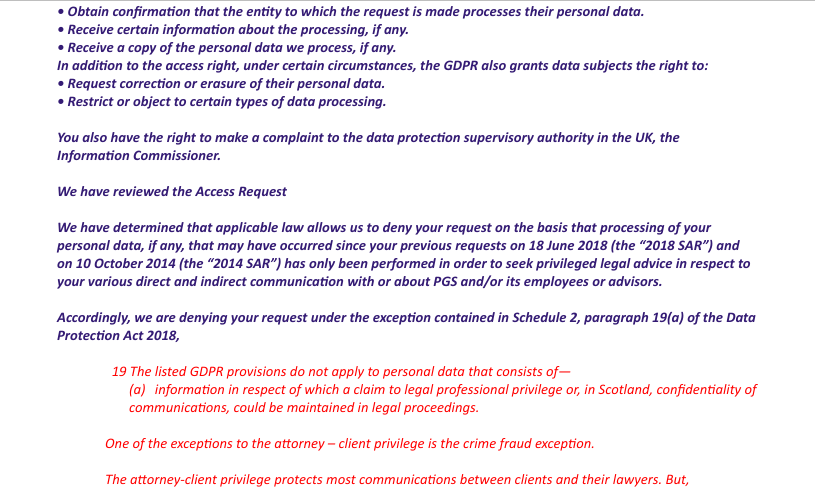
- The Data Minimization and Erasure Paradox: While GDPR mandates that companies shouldn’t keep data forever, it strictly prohibits the targeted destruction of data to evade a Subject Access Request (SAR) or an active court proceeding.
- Regulatory Fines: The UK Information Commissioner’s Office (ICO) and the Norwegian Data Protection Authority (Datatilsynet) can level catastrophic fines (up to 4% of global annual turnover or £17.5M / €20M) against corporations that deliberately manipulate or destroy employee data to circumvent statutory individual rights or cover up workplace retaliation.
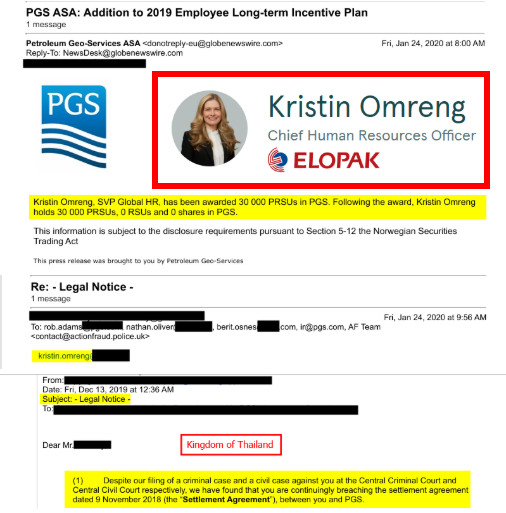
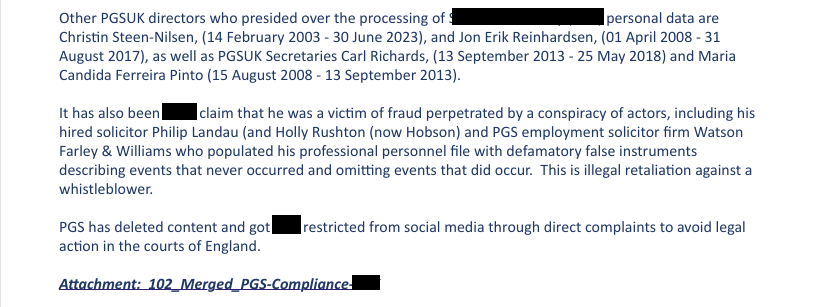
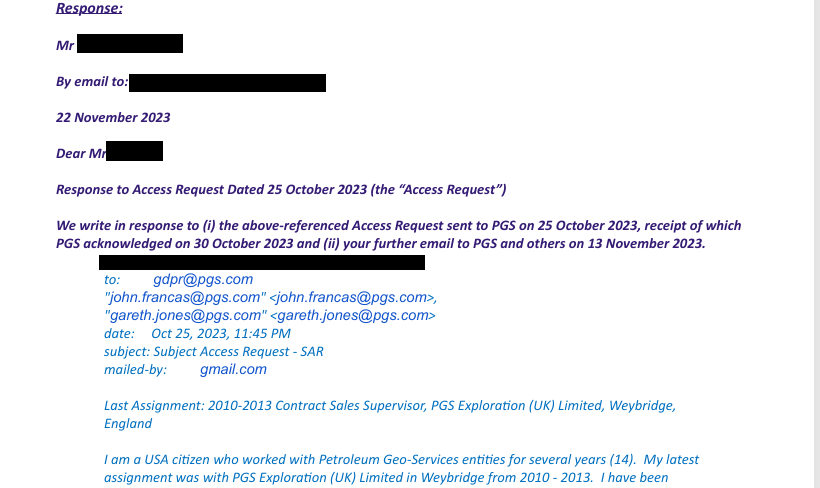
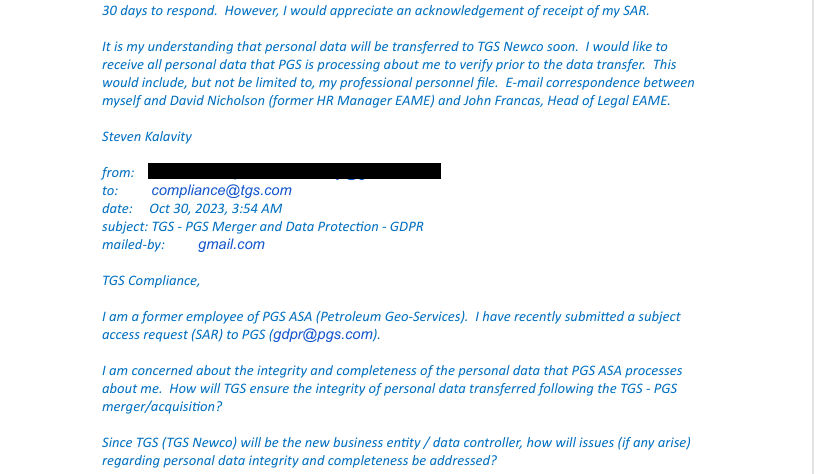
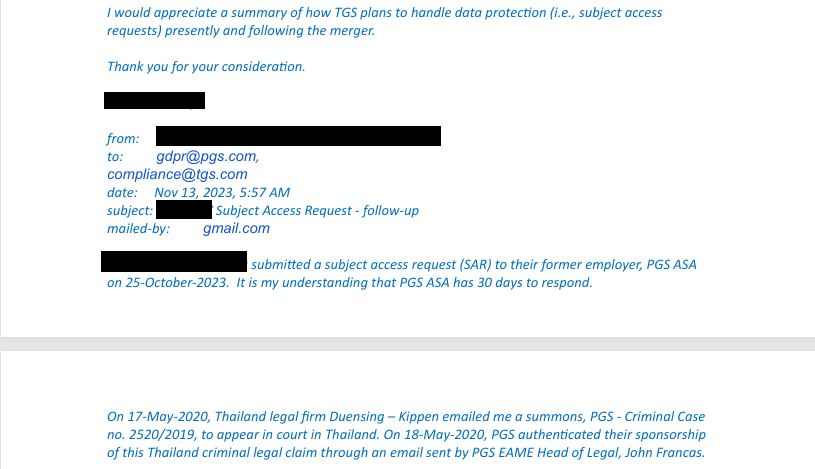
A Whistleblower’s Documented History
Direct Jurisdictional Comparison
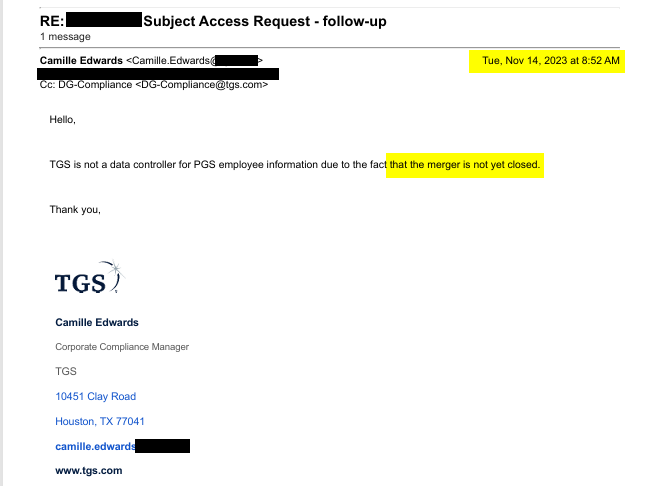
The Compliance Manager —as a US-citizen attorney practicing corporate compliance in Harris County (Houston), Texas—occupies a position of extreme legal vulnerability.
In the United States, an attorney acting as a corporate compliance officer cannot hide behind a corporate veil if they actively participate in, facilitate, or knowingly cover up ongoing criminal fraud, evidence destruction, or transnational retaliation. Such a Compliance Manager’s culpability spans professional, civil, and criminal dimensions under Texas, US federal, and international legal frameworks.
1. Criminal Culpability under US Federal Law
Because the Compliance Manager operates within the United States, handles cross-border corporate operations, and was explicitly put on notice to preserve records before the merger finalized, her decision to allow or orchestrate the destruction of your personal data carries severe federal criminal exposure:
- Sarbanes-Oxley Act (SOX) Section 802 (18 U.S.C. § 1519) – Destruction of Records: This is her highest immediate criminal risk. Section 802 makes it a federal crime to knowingly alter, destroy, mutilate, or conceal any record, document, or tangible object with the intent to obstruct, influence, or impede the investigation or proper administration of any matter within the jurisdiction of any department or agency of the United States, or in contemplation of any such matter.
- Application: Because the Compliance Manager was explicitly notified and the acquiring company of a cross-border conspiracy, fraudulent filings, and potential federal claims (such as RICO) prior to the merger, the subsequent destruction of your files constitutes a felony. It carries a penalty of up to 20 years in prison.
- Federal Conspiracy to Obstruct Justice (18 U.S.C. § 371 & § 1512): By ignoring your preservation demands, failing to halt the retaliatory Thai litigation, and overseeing the destruction of evidence to push the merger through, she can be charged as a co-conspirator. Her actions directly aided the predecessor company’s campaign to suppress a whistleblower through a fraudulent settlement contract and retaliatory imprisonment.
- Mail and Wire Fraud Co-Conspirator: If she utilized interstate wires or emails from Houston to coordinate the merger closures, share-value assessments, or regulatory filings while knowingly concealing a massive, ongoing, duress-backed international litigation campaign and forged personnel files, the Compliance Manager becomes a participant in a scheme to defraud stakeholders and regulators.
2. Civil Culpability under Texas and Federal Law
While employees are generally shielded from personal liability for standard corporate acts, an attorney/compliance officer faces direct individual civil liability when they personally engage in tortious or fraudulent conduct.
- Federal Civil RICO Liability (18 U.S.C. § 1962): You noted an intention to pursue a Federal Civil RICO claim in Texas. To name her individually as a defendant, the Compliance Manager’s actions must fit into a “pattern of racketeering activity.”
- Application: The Compliance Manager’s role as the compliance gatekeeper who actively chose to validate a fraudulent contract, ignore blacklisting, look away from stolen passport data used for a retaliatory arrest, and purge the evidence pool constitutes a vital link in the continuous racketeering enterprise. Under RICO, the Compliance Manager’could be held jointly and severally liable for treble (triple) damages and the Whistleblower attorney fees.
- Spoliation of Evidence & Intentional Tortious Conduct: In Texas federal courts, the Compliance Manager’s destruction of the Whistleblower’s personnel files after receiving explicit preservation notices triggers the highest level of civil sanctions for spoliation. While Texas state law does not recognize an independent tort for spoliation, federal courts possess inherent power to levy severe monetary sanctions directly against the Compliance Manager and the corporation, strike the company’s defenses, and enter a default judgment.
- Fraudulent Concealment: By certifying or allowing the merger to close without correcting the known, forged performance records and illegal dual-venue duress agreements, the Compliance Manager engaged in fraudulent concealment to protect the transaction at the Whistleblower’s expense.
3. Professional and Ethical Culpability (State Bar of Texas)
As a licensed US attorney practicing in Houston, she is strictly bound by the Texas Disciplinary Rules of Professional Conduct (TDRPC). Her conduct represents catastrophic violations of her professional license:
- Rule 1.02(c) & Rule 8.04(a)(3) – Assisting Corporate Fraud and Dishonesty: A Texas lawyer is strictly prohibited from assisting a client (the corporation) in conduct that the lawyer knows is criminal or fraudulent. Rule 8.04 explicitly states a lawyer shall not engage in conduct involving dishonesty, fraud, deceit, or misrepresentation. Validating a forged personnel file and an illegal contract violates this rule fundamentally.
- Rule 3.04 – Fairness to Opposing Party and Counsel: This rule explicitly states that a lawyer shall not unlawfully alter, destroy, or conceal a document or other material having potential evidentiary value. Deleting an entire data set following a formal Subject Access Request and an explicit litigation hold notice is a clear, disbarrable violation.
- Rule 1.12 – Organization as a Client (Up-the-Ladder Reporting): As a Compliance Manager and attorney, her legal duty when discovering that corporate agents used forged records, stolen passports, and foreign prisons to silence a whistleblower was to report that misconduct up the corporate ladder—ultimately to the Board of Directors or Chief Executive—to cease the illegality. By choosing instead to destroy the data and permit the fraud, the Compliance Manager violated their core fiduciary and ethical duty to the acquiring corporation itself, exposing the new entity to catastrophic liability.
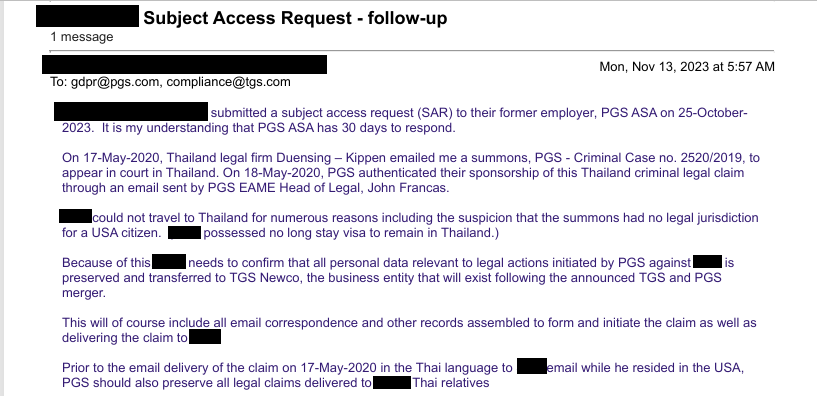
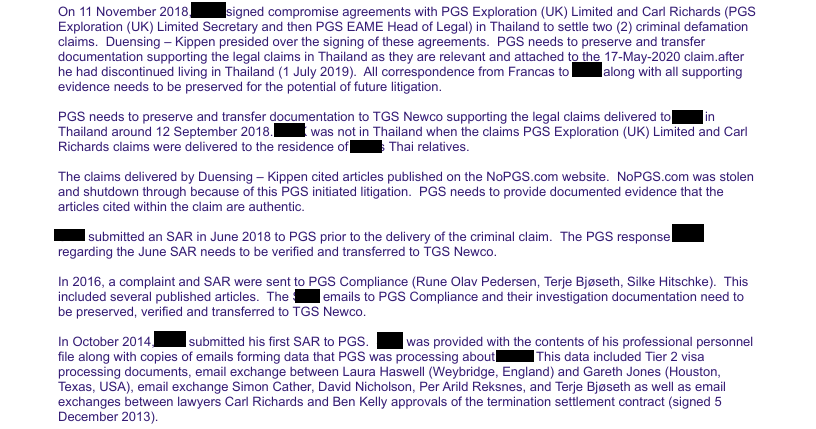
nnnn